


Jechsafety's Method: Weight Balance Challenges for a Full Body Harness Factory Using Both Metal Types
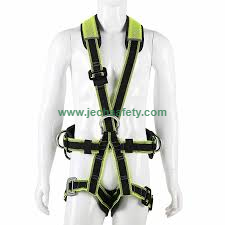
Aluminum offers light weight. Steel provides brute strength. A single safety harness needs both qualities at different locations. Can a Full Body Harness Factory place aluminum buckles next to steel dorsal rings without compromising safety? jechsafety operates from Zhejiang province with multiple international certifications. Their production team assembles harnesses carrying CE, ANSI, and CSA approvals. Does mixed-metal construction survive real-world fall forces and environmental exposure?
Galvanic corrosion represents the primary challenge. Aluminum and steel touch each other inside a single harness. Moisture turns that contact point into a battery. The less noble metal—aluminum—corrodes preferentially. Factory engineers interrupt this electrical path. Plastic washers separate aluminum buckles from steel rivets. Nylon coating covers steel D-rings where aluminum connectors attach. Jechsafety applies dielectric grease on threaded interfaces. Each isolation method prolongs component life without adding weight.
Strength requirements differ by harness position. Dorsal attachment points must arrest a falling worker. Steel withstands this sudden load with minimal deformation. Front chest buckles see lower forces but require frequent operation. Aluminum allows one-handed closure. A factory cannot use steel everywhere. Weight would exceed ergonomic limits. Jechsafety maps each component's load path before selecting metal type. Their design software calculates force distribution across the whole harness. Only locations experiencing genuine high loads receive steel hardware.
Testing protocols account for mixed materials. A standard harness undergoes static load testing. A hybrid unit requires additional verification. Jechsafety cycles each aluminum-steel junction through temperature extremes. Minus 30°C to plus 50°C. Differential expansion rates cannot loosen any connection. Separate salt spray tests run for 96 hours. Any galvanic staining on aluminum fails the batch. Their laboratory maintains separate environmental chambers for each test type.
Fastener compatibility demands attention. Steel bolts into aluminum threads cause galling. Aluminum screws lack strength for steel brackets. Jechsafety uses stainless steel rivets for mixed joints. The rivet contacts both materials equally. Stainless sits between aluminum and steel on the galvanic scale. No single metal corrodes preferentially. Each rivet receives an anodized coating before assembly. Production records track every fastener batch to source certificates.
User weight affects material choice. Heavier workers generate higher fall forces. Steel becomes mandatory for dorsal attachments beyond a certain load threshold. Lighter users allow aluminum throughout. Jechsafety publishes weight-specific recommendations for each harness model. A Full Body Harness Factory cannot apply one metal rule to every customer. Their catalog separates harnesses by maximum user weight. Each weight class has documented metal composition.
Field inspection identifies mixed-metal wear patterns. Aluminum shows white oxidation first. Steel rusts reddish-brown. A hybrid harness displays both if moisture penetrates protective coatings. Jechsafety trains distributor staff to recognize early corrosion signs. Inspection checklists include separate sections for each metal type. Replacement intervals shorten when both metals show degradation. Their warranty terms distinguish between aluminum wear and steel fatigue.
Manufacturing workflow separates metal assembly stages. Steel components arrive from one forging partner. Aluminum castings come from a different supplier. Jechsafety maintains segregated storage bins. Assembly workers wear different gloves when handling each metal. Cross-contamination of metal dust causes embedded corrosion sites. Vacuum systems capture particles at each workstation. Quality audits include swab tests for trace iron on aluminum parts.
Thread locking chemistry changes with metal type. Aluminum requires anaerobic adhesives formulated for non-ferrous surfaces. Steel accepts standard threadlockers. Jechsafety applies color-coded compounds. Red for steel connections. Blue for aluminum. A visual inspection confirms correct adhesive use. Torque drivers record applied force for every fastener. Their database stores these values for five years after production.
The final assembly receives complete photographic documentation. Each harness hangs on a light box. Cameras capture every mixed-metal junction. Images go into the customer's quality package. Jechsafety archives these photos for the product's service life. Visit https://www.jechsafety.com/product/safety-harness/ to review hybrid harness specifications and test summaries. A genuine Full Body Harness Factory masters both aluminum and steel. Does your current supplier offer documentation proving mixed-metal compatibility?
 Russian
 English
 Arabic
 French
 Spanish
 Portuguese
 Deutsch
 Turkish
 Dutch
Dutch
 Italiano
 Romaian
 Portuguese (Brazil)
 Greek
Greek